01 — Case Study
← Work
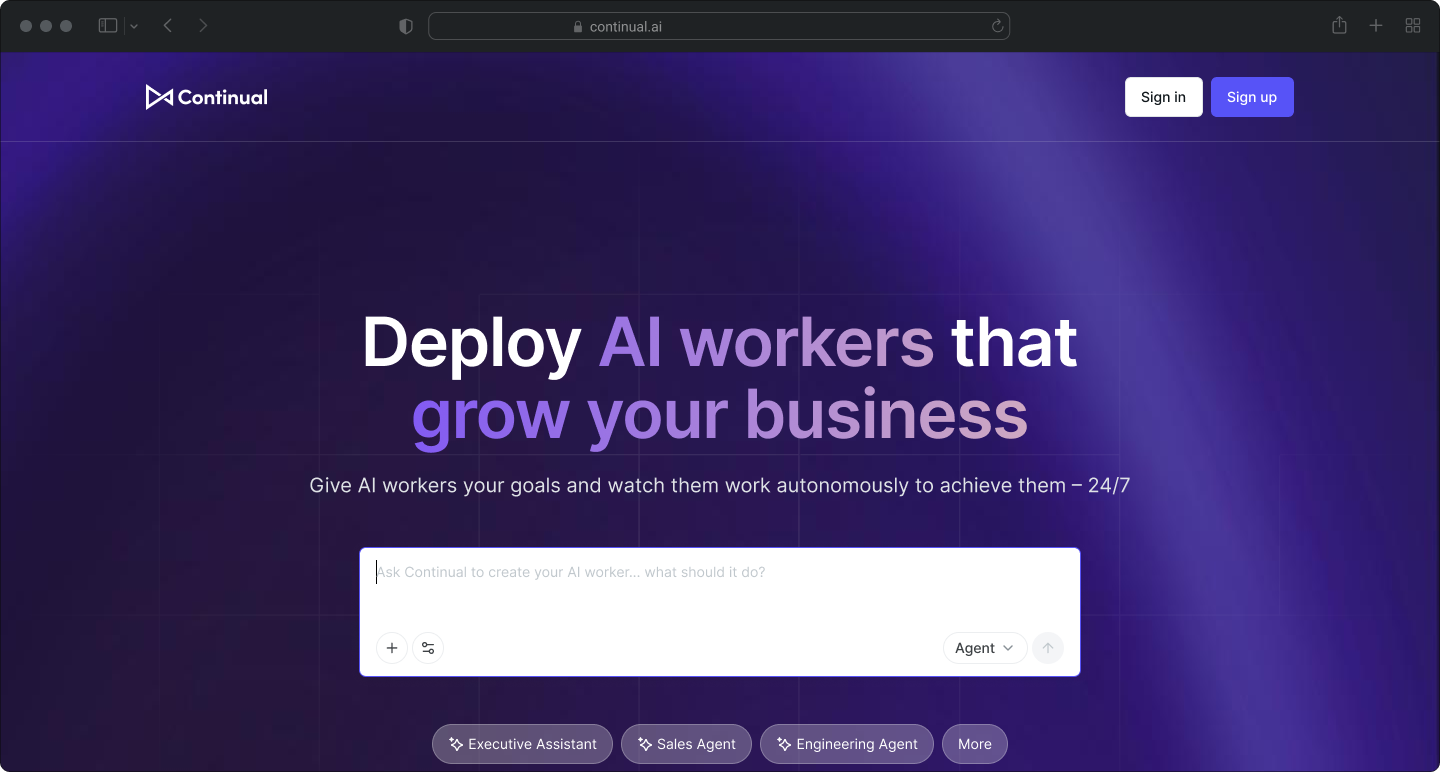
An AI agent platform for business operations.
The problem
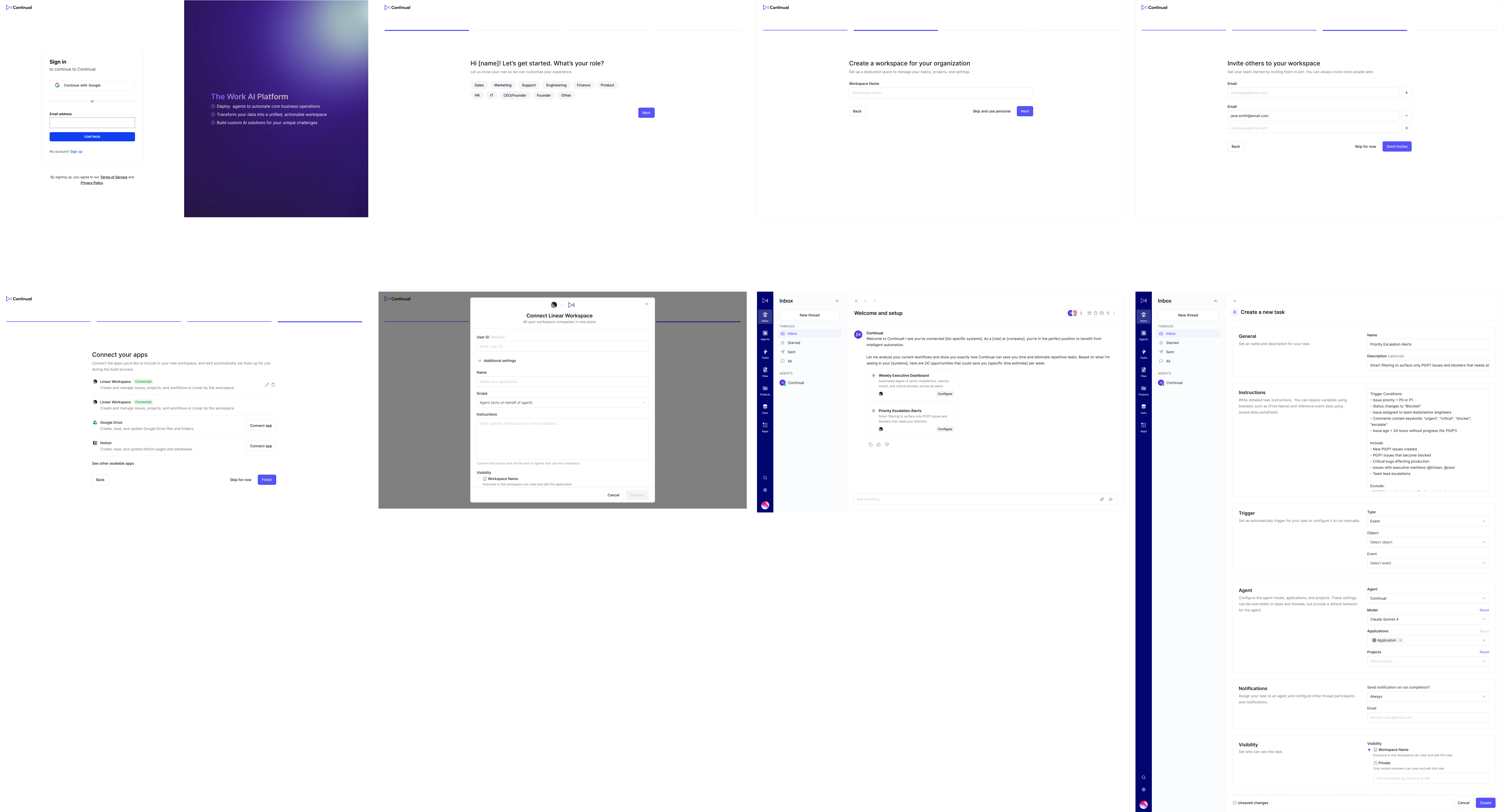
New users couldn’t grasp what the platform did until they’d already spent fifteen minutes setting it up. By the time they reached the actual product, many had already decided it wasn’t worth the effort — which made onboarding a really interesting place to rethink the entire shape of the first-run experience.
The decision
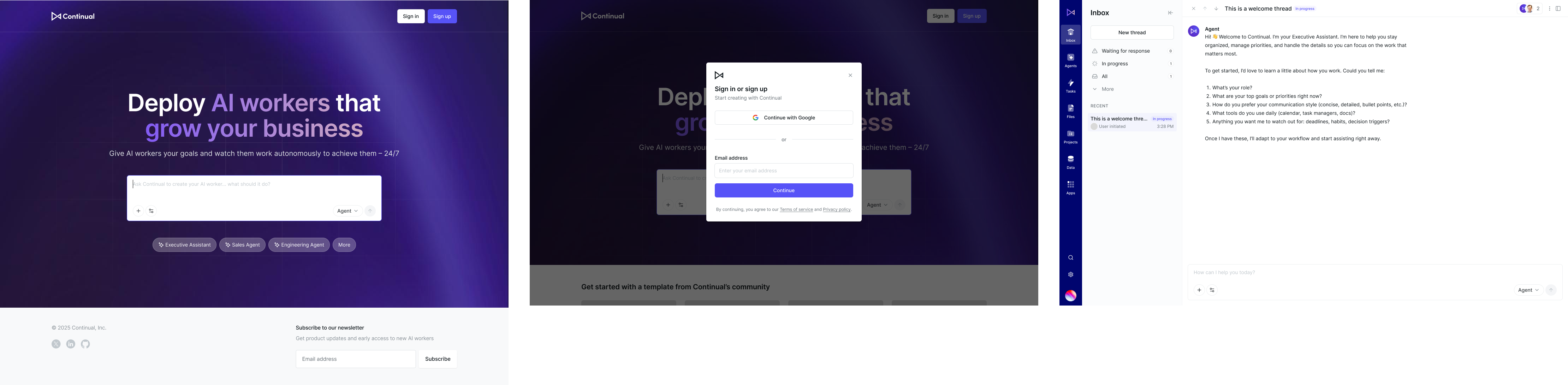
I had the opportunity to move the first agent creation to the first screen. Instead of following the standard B2B onboarding sequence — profile, team invites, integrations, then the product — users land directly in a natural-language agent builder and ship a working agent before being asked for anything else. Profile and team setup move to a post-activation prompt, triggered only after the user has seen their agent run.
Before
After
What I intentionally removed
- Multi-step setup wizard — every step before value delivery is a step where users decide the product isn’t worth finishing.
- Role-based onboarding paths — role didn’t actually predict what users wanted to build; the agent-building task was the same for everyone, so branching the flow added complexity without earning it.
The outcome
- Shipped as the default flow for all new accounts.
- The decision to lead with creation, not configuration, became the organizing principle for the rest of the product’s information architecture — a lovely thing to see take root beyond just the onboarding work.
Scope
Beyond onboarding, I designed four other surfaces of the platform.
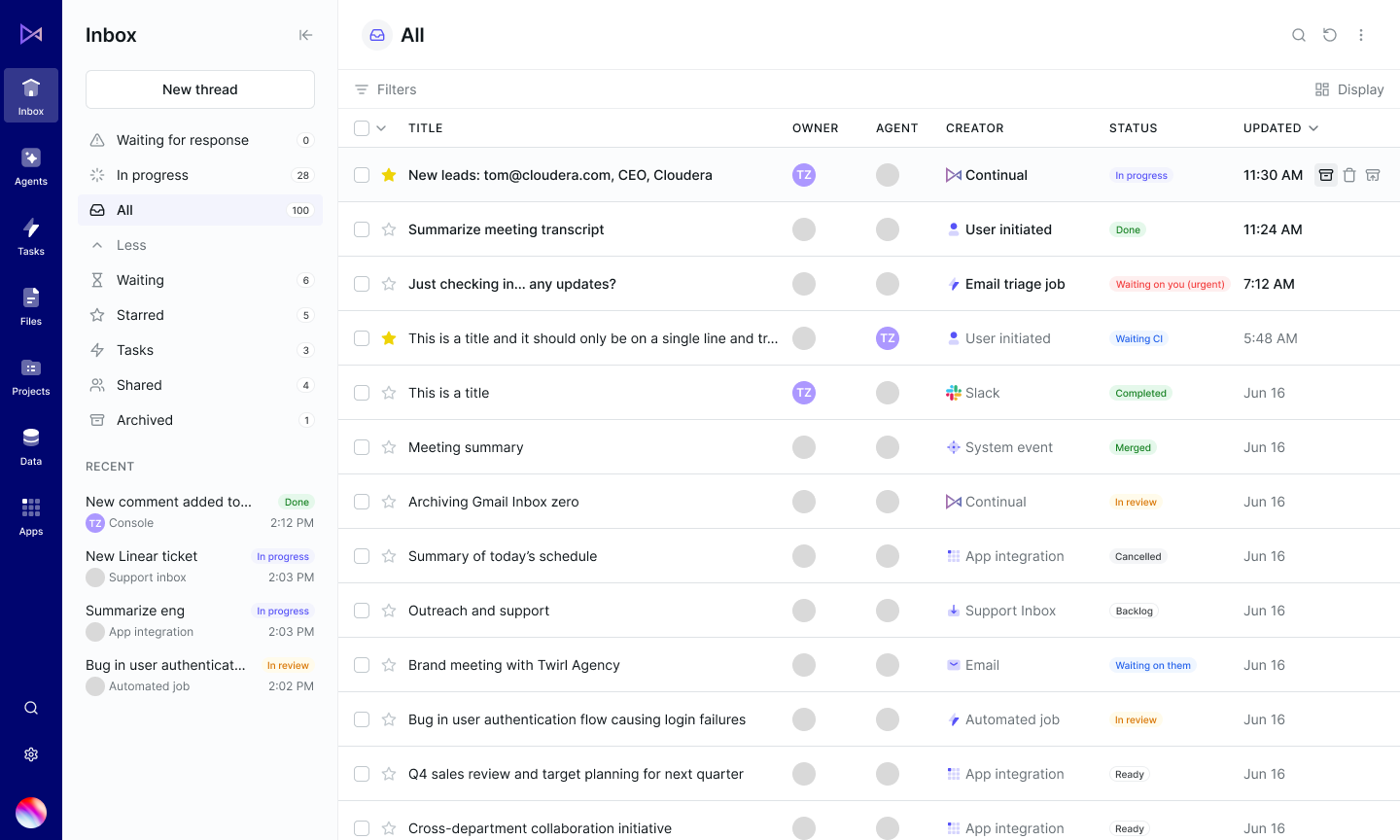
Inbox view
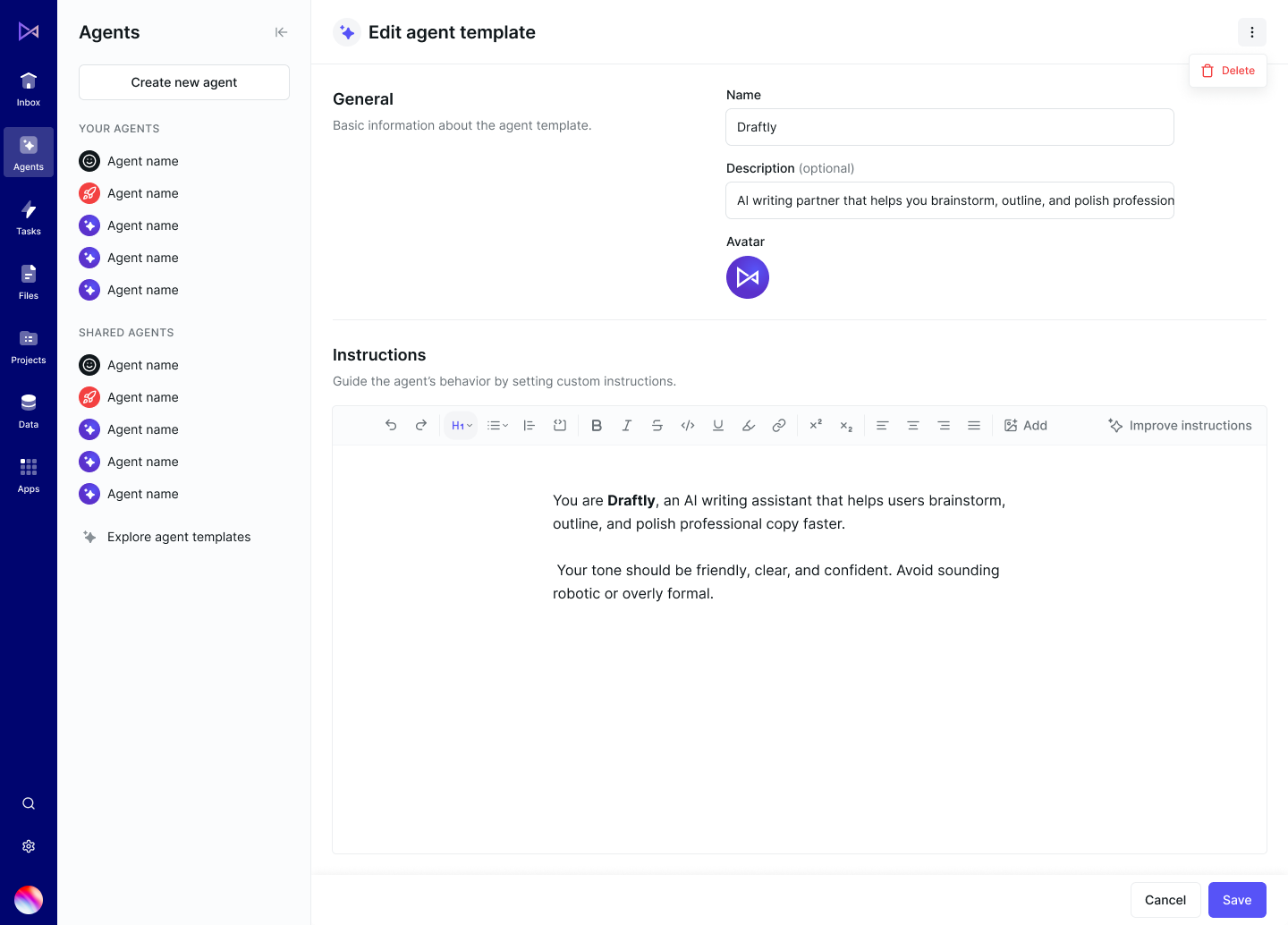
Agent templates
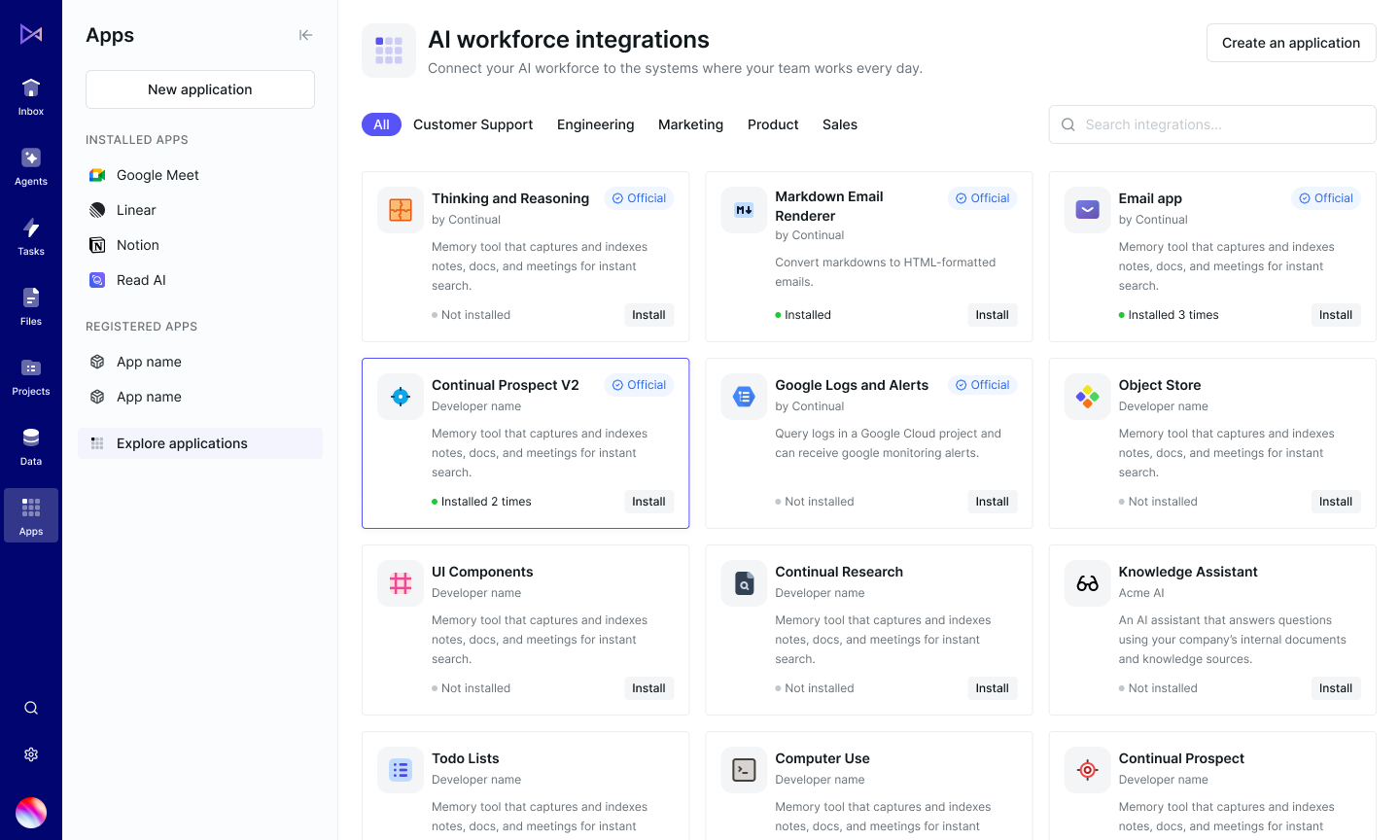
App marketplace
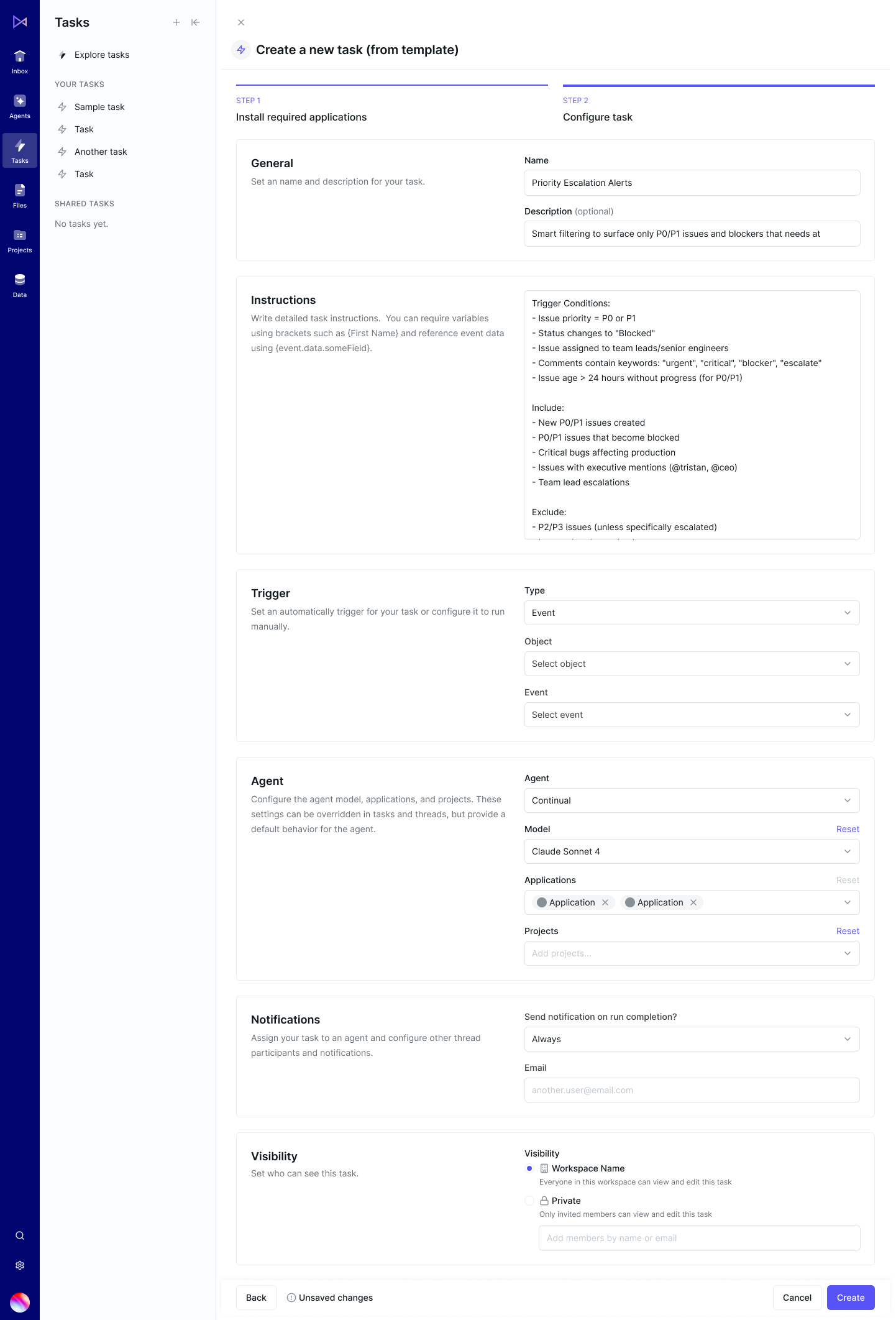
Tasks and projects
- Inbox view — a centralized thread list surfacing agents that needed user input, designed to scale gracefully as accounts moved from a single agent to dozens.
- Agent templates — a curated library of pre-built agents that reduced blank-page friction and demonstrated platform capability without requiring users to dig through documentation.
- App marketplace — a discoverability and admin-approval flow for third-party integrations, balancing user extensibility with platform governance for larger accounts.
- Tasks and projects — the execution layer — manual and scheduled task creation, alongside file management for contextual agent memory.